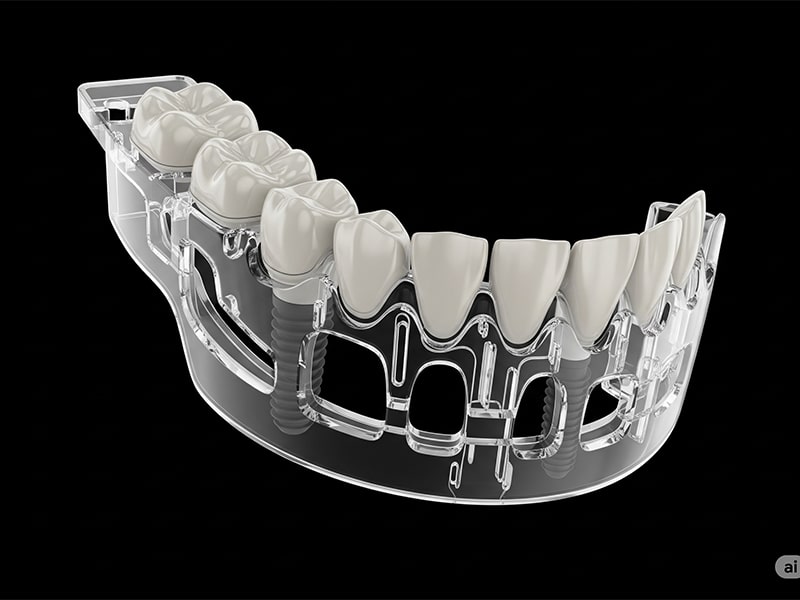
Implant Surgical Guide
Dental implant surgery is one of the most advanced methods for replacing missing teeth, requiring precision and careful planning. One of the essential tools in this process is the surgical guide for implants, which assists dentists in accurately determining the location, angle, and depth of implant placement.
This article explores the concept, types, benefits, and applications of surgical guides in dental implantology.
________________________________________
What is a Surgical Guide for Dental Implants?
A surgical guide is a custom-made device created based on the patient’s digital scans. It serves as a template or guide during implant surgery, allowing the dentist to drill precisely at the planned location and angle in the jawbone.
Manufacturing Process of a Surgical Guide:
1. Digital scanning of the patient's mouth (using CBCT and intraoral scanners)
2. 3D planning of implant positions and angles via specialized software
3. Physical fabrication of the guide using 3D printing or CNC milling technology
________________________________________
Types of Surgical Guides for Implants
1. Fixed (Rigid) Guides
These guides are firmly attached to the jaw and do not move during surgery. They offer high accuracy and are typically made from hard materials.
2. Removable Guides
These can be taken on and off and are reusable, but generally offer less precision than fixed guides.
3. Digital (Computer-Guided) Guides
This method involves full digital planning and computer-guided surgery, providing the highest level of accuracy.
________________________________________
Benefits of Using Surgical Guides in Implant Placement
• Increased surgical accuracy: Minimizes human error in implant positioning and angulation
• Reduced surgery time: Pre-planning enables faster execution of procedures
• Minimized damage to adjacent tissues: Prevents injury to nerves and sinuses
• Improved treatment outcomes: Precise implant placement enhances prosthesis stability and longevity
• Reduced post-operative pain and swelling: Less invasive surgery leads to faster healing
________________________________________
Applications of Surgical Guides in Implantology
Implant Surgery in the Upper and Lower Jaw
Especially critical in sensitive anatomical areas, surgical guides significantly enhance precision.
Multiple Implant Placements
In cases requiring several implants simultaneously, guides assist in correctly spacing and angulating implants.
Bone Reconstruction and Complex Treatments
In procedures involving bone grafting or other complex interventions, surgical guides reduce errors and improve treatment success.
________________________________________
Important Considerations When Using Surgical Guides
• Selecting experienced clinicians and centers: Proficiency in guide-assisted surgery is crucial
• Quality of digital scans and design: Accuracy of CBCT imaging and software planning directly affect guide quality
• Proper fit and stability of the guide: The guide must fit securely to maintain precision
• Sterilization and hygiene: To prevent postoperative infections, strict sterilization protocols are necessary
________________________________________
Procedure for Using Surgical Guides in Implant Surgery
1. Preparing the patient and disinfecting the surgical area
2. Fitting the surgical guide onto the patient’s jaw
3. Drilling and placing implants guided by the surgical template
4. Removing the guide and proceeding with surgery as planned
5. Post-operative care and follow-up
________________________________________
Conclusion
Using a surgical guide for dental implants is a modern and precise approach that reduces surgical risks and enhances the quality and durability of implant-supported restorations. Choosing the right guide, collaborating with skilled professionals, and leveraging advanced technologies are key factors for successful implant treatment.
________________________________________