Digital Implant An Innovative Method for Replacing Lost Teeth
________________________________________
Digital Implant: An Innovative Method for Replacing Lost Teeth
In today's world, technology is advancing rapidly, and the field of dentistry is no exception. Digital implants, as one of the most advanced and modern methods for replacing missing teeth, have significantly increased the precision, speed, and success rate of treatments. This innovative method uses 3D scans and advanced software to simulate and plan the dental implant procedure. Digital implants represent a significant breakthrough in dentistry, leveraging modern technology for precise and efficient implant placement.
The Combination of Advanced Technology and Dental Art
Digital implants combine cutting-edge technology with the artistry of dentistry. This technique utilizes 3D scanners, design software, and advanced printers to offer a new level of precision and comfort while minimizing complications. With this method, new teeth are replaced with millimeter-level accuracy, eliminating human errors.
In summary, digital implants provide an advanced and precise solution for replacing missing teeth through innovative technologies such as 3D scanning, digital design software, and modern printing. These advancements allow dentists to design and place implants with unmatched precision, significantly reducing human error. As a result, the new tooth not only looks natural but also functions just like a real tooth.
________________________________________
Differences Between Digital and Traditional Implants
The key differences between digital and traditional implants are as follows:
Procedure
• Traditional Implant: The traditional method relies on conventional molds to create a model of the teeth and jaw, with surgery performed manually using mechanical tools. The dentist determines the implant placement based on experience and standard X-ray images.
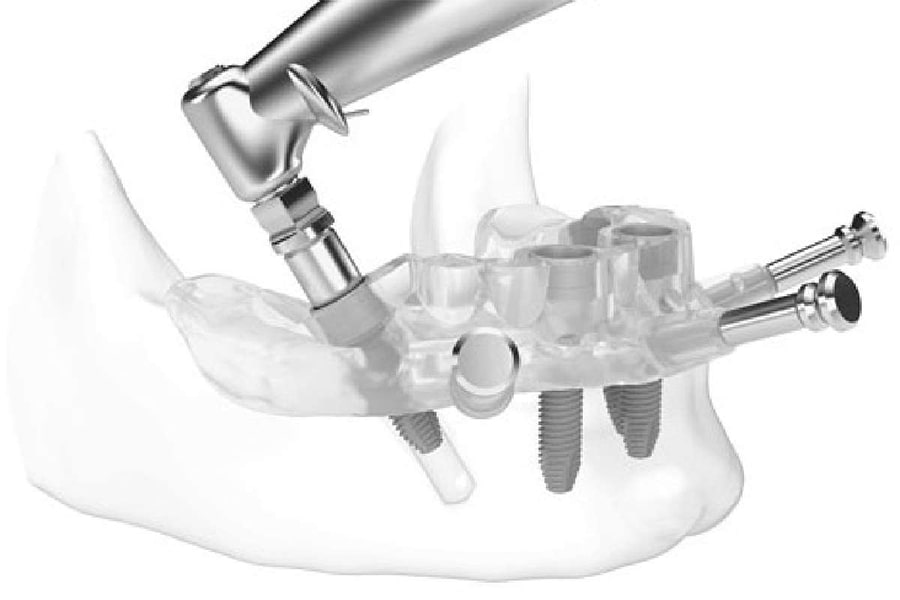
• Digital Implant: In the digital method, intraoral 3D scanners create precise three-dimensional images of the teeth and jaw. Advanced software is used to plan the surgery and determine the exact placement of the implant. Additionally, custom surgical guides are created to assist in precise implant placement.
Precision
The success of traditional implant placement depends on the dentist's skill and experience, increasing the risk of human error. In contrast, digital implant procedures significantly minimize errors due to their digital nature.
Surgical Incision and Sutures
• Traditional Implant: Requires deep incisions in the gum, followed by sutures after implant placement.
• Digital Implant: Does not require large incisions or sutures. Instead, a small hole is precisely drilled in the gum, just the size of the implant base.
Pain and Bleeding
Traditional implants often cause more pain and bleeding compared to digital implants.
Number of Visits and Treatment Duration
Traditional implants require multiple visits and a lengthy treatment process that can take several months. In contrast, digital implants allow patients to receive their implants in a single visit, with each implant taking less than 30 minutes.
Healing Time
Healing in traditional implants takes longer, whereas digital implants offer faster recovery.
Aesthetics
Digital implants provide a more natural and aesthetically pleasing appearance compared to traditional implants.
Imaging Requirements
Traditional implants require a standard OPG (panoramic X-ray), whereas digital implants need advanced 3D imaging obtained with high-tech equipment.
Cost
Digital implants are more expensive than traditional implants.
Durability
The higher precision in digital implant placement increases the implant’s longevity.
Post-Surgery Care
Patients with digital implants can resume normal health and eating habits immediately after surgery, whereas traditional implants require special post-operative care due to sutures and pain.
________________________________________
Is Digital Implant Suitable for Everyone?
Digital implants are generally recommended for individuals with good overall health and proper oral hygiene. They are ideal for those who have lost one or more teeth and seek a durable and natural replacement. Digital implants are also the best option for patients looking to reduce treatment time and complications.
However, digital implants are not suitable for everyone, and certain conditions should be considered.
Who Is Not a Good Candidate for Digital Implants?
1. Individuals with Severe Gum Disease: Those suffering from conditions like periodontitis must first treat their gum disease.
2. Patients with Low Jawbone Density: The jawbone must be strong and dense enough to support an implant. If the bone is insufficient, a bone graft may be required.
3. Individuals with Systemic Diseases: Conditions such as uncontrolled diabetes or osteoporosis can affect implant healing.
4. Smokers: Smoking slows the healing process and increases the risk of infection. It is recommended to quit smoking at least two weeks before and after implant surgery.
5. Individuals with Weak Immune Systems: Those with compromised immunity, such as patients with HIV or undergoing chemotherapy, are more susceptible to infections.
6. People Who Grind Their Teeth (Bruxism): Teeth grinding can damage implants.
7. Individuals with Bone Diseases: Severe osteoporosis or other bone conditions may make a patient unsuitable for implants.
Patients with chronic diseases such as diabetes or heart conditions should consult their doctor. If their condition is under control and does not interfere with surgery, they may still be eligible for digital implants. Digital implants are also suitable for elderly individuals, as they involve a minimally invasive procedure with high precision, but their overall health status should be assessed by a dentist.
________________________________________
Conclusion
In conclusion, digital implants represent a remarkable advancement in modern dentistry, offering new hope for individuals seeking to replace their missing teeth. This technique provides unmatched precision, reduces treatment time and pain, and enhances implant longevity, ensuring a superior and more satisfying experience for patients.
While digital implants may not be suitable for everyone, they offer an ideal solution for many individuals, restoring both the aesthetic and functional aspects of teeth while improving quality of life. Before deciding on an implant, it is essential to consult with a specialized dentist and evaluate individual conditions.
With digital implants, you can regain your beautiful smile and confidence once again.
________________________________________


